
Vintage 35mm Film Photography Prompts: Kodak Portra 400, CineStill 800T & Authentic Grain
Master vintage analog 35mm film aesthetics in AI photo prompts. Learn how to simulate Kodak Portra 400, CineStill 800T red halation, Fujifilm Provia color science, organic silver-halide film grain, and vintage prime lenses in Midjourney, Flux, and Gemini.
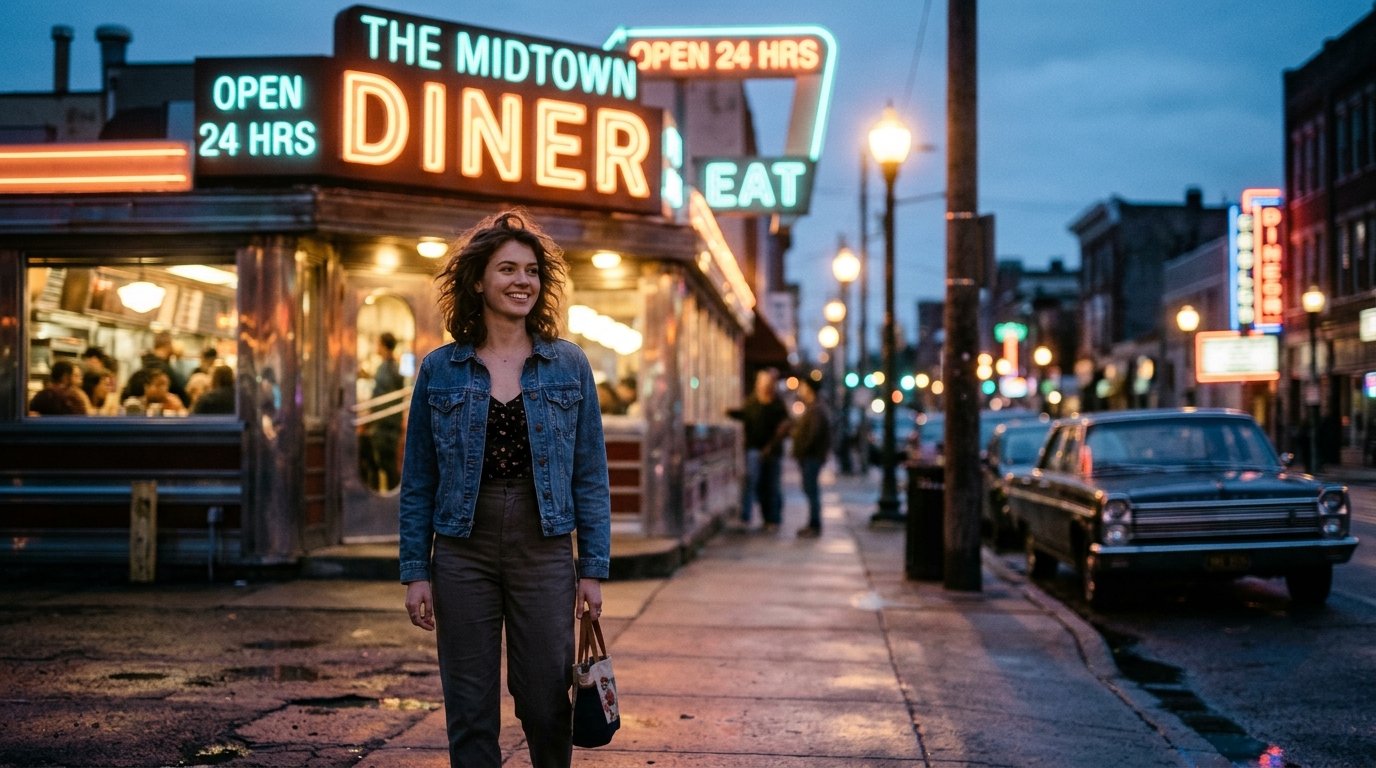
In an era dominated by hyper-sterilized digital sensors and computational smartphone photography, modern audiences crave the tactile, nostalgic soul of analog 35mm film. The gentle highlight roll-off, rich chemical color palettes, subtle optical halation, and organic silver-halide grain of vintage film stocks evoke an emotional intimacy that pristine digital captures cannot replicate.
When creators attempt to emulate film in generative AI models like Midjourney v6.1, Black Forest Labs' Flux.1, and Google Gemini (Imagen 3), the results frequently look artificial. Adding lazy prompt keywords like 'film grain,' 'vintage look,' or 'retro filter' often causes the neural network to apply a crude digital noise overlay—resembling broken high-ISO sensor speckling or a cheap Instagram filter—while leaving lighting and color physics sterile.
Authentic analog film is not a digital noise filter applied in post-production; it is a physical, photochemical medium. Each iconic film stock—such as Kodak Portra 400, CineStill 800T, Fujifilm Superia 400, or Kodak Tri-X 400—possesses a unique chemical emulsion response, dynamic range curve, halation behavior, and dye coupler profile. When you guide AI models using precise film emulsion physics, vintage lens mechanics (such as Leica Summilux or Canon FD glass), and analog exposure techniques, generative diffusion networks synthesize genuine photochemical magic.
This masterclass guide provides a comprehensive breakdown of vintage 35mm film prompt engineering. You will master the color science of legendary film stocks, learn how to prompt authentic red halation and organic grain without digital artifacts, and access tested copy-ready prompt formulas engineered for evocative portraiture, nighttime street photography, and timeless editorial captures.
The Photochemical Physics of 35mm Film: Beyond Digital Filters
To prompt film successfully, one must understand how analog film functions chemically. A roll of 35mm color film consists of a flexible acetate base coated with multiple microscopic gelatin emulsion layers embedded with light-sensitive silver-halide crystals and color dye couplers. When light strikes these crystals, it initiates a chemical reaction. During development, the silver is converted into metallic silver grains and replaced by colored dyes (cyan, magenta, and yellow). Because these crystals are distributed randomly in organic clusters rather than a rigid digital pixel grid, analog grain possesses variable organic clustering, soft edges, and tonal depth. Furthermore, film has an S-shaped Hurter & Driffield response curve: it protects bright highlights with a gentle, soft roll-off, gracefully compressing overexposure rather than harshly clipping into pure digital white. Incorporating terms like 'soft analog highlight roll-off' and 'organic silver-halide crystal grain structure' instructs diffusion models to synthesize chemical dynamic range rather than digital sensor behavior.
The Iconic Film Stocks: Color Science & Emulsion Profiles
Different film stocks yield dramatically distinct aesthetic moods. Use these exact stock names to invoke their authentic color sciences: 1. Kodak Portra 400 (The Portrait Benchmark): Renowned for its warm, golden amber undertones, exceptionally smooth skin tone rendering, muted pastel saturation, and ultra-fine grain. It flatters human complexions and handles high-contrast sunlight with gentle grace: 'shot on 35mm Kodak Portra 400 film, warm golden hour skin tones, soft pastel highlights, fine grain.' 2. CineStill 800T (The Night Cinematic Legend): Originally Kodak Vision3 500T motion picture stock modified for still photography by stripping the protective black carbon 'remjet' backing layer. This removal causes intense point light sources (such as neon signs, streetlamps, and car headlights) to reflect off the film base, creating a signature crimson-red glow known as 'halation.' Tungsten-balanced with cool cyan/teal shadow tones and fiery red light blooming. 3. Fujifilm Provia 100F & Superia 400: Slide and consumer stocks known for cool emerald greens, vivid sky blues, and crisp, punchy daylight contrast: 'Fujifilm Superia 400 aesthetic, vivid green foliage hues, crisp daylight color balance.' 4. Kodak Tri-X 400 & Ilford HP5 Plus: Legendary black-and-white stocks. Tri-X delivers dramatic contrast, gritty organic grain, and deep obsidian blacks (ideal for documentary street photography). Ilford HP5 provides a softer, silver-toned, expansive grayscale dynamic range.
Mastering CineStill 800T Halation & Light Blooming
Halation is the hallmark of cinematic night photography on film. In modern digital photography, anti-reflective coatings eliminate light bouncing inside the sensor. In CineStill 800T, bright highlights bleed through the emulsion, strike the camera pressure plate, and reflect back into the red-sensitive chemical layer, generating a warm red/orange halo around light sources. To recreate authentic halation in AI prompts, specify: 'night street portrait shot on CineStill 800T, tungsten light color balance with deep cyan shadows, warm neon signage, distinct crimson red optical halation blooming around bright point light sources, atmospheric haze, subtle film glow.' Avoid saying 'red glow on everything'; anchor the halation specifically around headlights, lanterns, or neon tubes.
Organic Silver-Halide Grain vs Synthetic Digital Noise
One of the most common prompt errors is writing 'noisy image' or 'gritty film noise.' Generative models interpret 'noise' as sensor ISO grain or digital compression artifacts, resulting in sharp, ugly chromatic pixel noise across the subject's face. To achieve authentic, pleasing film grain: 1. Use positive chemical phrasing: 'organic 35mm silver-halide film grain,' 'tactile 400 ISO analog grain texture,' 'subtle medium-format grain structure.' 2. In Midjourney, use moderate '--stylize' values (150 to 250) paired with '--style raw' to prevent the model from scrubbing grain out with cosmetic smoothing. 3. In Flux.1, keep guidance scale between 3.0 and 3.4; high guidance burns grain into harsh digital speckles.
Vintage Analog Lenses: Pairing Glass with Film Stocks
Film cameras relied on manual prime lenses crafted with leaded glass, manual aperture diaphragms, and single-layer anti-reflective coatings. These vintage optics impart subtle optical imperfections—such as gentle spherical aberration, soft micro-contrast, optical vignetting, and circular cat-eye bokeh—that complement film aesthetics: 1. Leica 50mm f/1.4 Summilux-M (Pre-ASPH): Famous for the 'Leica glow,' silky transition from focus to blur, and exquisite micro-contrast. 2. Carl Zeiss Planar T* 85mm f/1.4: Delivers creamy three-dimensional subject pop with gorgeous contrast rendering. 3. Canon FD 55mm f/1.2 S.S.C.: A vintage 1970s dream lens featuring soft dreamy wide-open flare and amber optical flaring when pointed towards the sun: 'shot on 1970s vintage Canon FD 55mm f/1.2 lens, warm amber lens flare, gentle peripheral optical vignetting.'
Lighting & Exposure Techniques for the Film Aesthetic
Analog film behaves differently under lighting conditions compared to digital sensors: 1. Overexposure Grace: Unlike digital sensors which blow out into harsh white squares when overexposed, negative film soaks in extra light, yielding ethereal, creamy pastel highlights: 'slightly overexposed negative film capture, lifted shadows, soft highlight rolloff.' 2. Natural Ambient Illumination: Film looks most authentic in mixed, practical lighting—such as warm incandescent lamps inside a coffee shop, golden hour sunlight glancing through blinds, or neon-lit rain puddles at twilight. 3. Avoid Harsh Digital Strobes: Specify 'natural ambient room light' or 'diffused window light' to avoid harsh flash artifacts.
Tested Copy-and-Paste 35mm Film Formulas
Formula 1 — Golden Hour Kodak Portra 400 Portrait (Midjourney v6.1 / Flux.1): 'Intimate cinematic portrait of an expressive young woman standing in a sun-drenched coastal meadow at late afternoon. Captured on 35mm Kodak Portra 400 color negative film using a Leica M6 with a Summilux 50mm f/1.4 lens. Warm golden skin tones, natural freckles, soft peach fuzz catching backlight, gentle highlight roll-off. Organic silver-halide film grain, muted earth-toned color palette, creamy circular bokeh, natural optical vignetting --ar 16:9 --style raw.' Formula 2 — Moody Twilight CineStill 800T Street Scene (Gemini Imagen 3 / Flux): 'A cinematic street photograph of a mysterious figure in a trench coat standing outside a retro Tokyo diner at twilight. Shot on 35mm CineStill 800T film, tungsten balanced with cool cyan and navy blue shadows. Neon sign reflections on wet asphalt with signature vibrant crimson red halation blooming around illuminated neon letters. Soft mist, atmospheric depth, vintage 35mm film aesthetic, photorealistic analog photography.' Formula 3 — Gritty Black & White Street Documentary (Kodak Tri-X 400): 'High-contrast black and white candid documentary street portrait of an old jazz musician sitting on a brownstone stoop in Harlem. Shot on Kodak Tri-X 400 film, 35mm format, deep rich black shadows, tactile silver-halide grain texture, crisp midtone separation, dramatic natural side lighting, timeless analog realism.'
Model Interpretations: Midjourney vs Flux.1 vs Gemini
1. Midjourney v6.1: Excels at capturing the nostalgic, painterly mood and color grading of Kodak Portra and CineStill. Always append '--style raw' to preserve natural grain texture and prevent excessive AI beauty filtering. 2. Flux.1 (Dev): Offers the most physically accurate lens physics and authentic grain integration. Flux renders human skin with real epidermal pores while respecting the gentle contrast curve of analog film. 3. Google Gemini (Imagen 3): Superb at rendering natural human expressions, casual candid poses, and authentic 1980s or 1990s retro environmental set dressing without introducing uncanny AI distortions.
Common Film Prompting Mistakes and How to Fix Them
1. Mistake: Using 'sepia' or 'retro filter.' Fix: Sepia turns your entire image into an unappealing brown wash. Specify the exact film stock (e.g., 'Kodak Portra 400') to get rich, nuanced color grading. 2. Mistake: Adding 'scratched film, dust, light leaks.' While light leaks can be fun, adding them frequently ruins subject faces with digital orange blobs. Let the film stock, grain, and lens geometry drive the vintage atmosphere. 3. Mistake: Over-prompting grain. If your image looks fuzzy, reduce grain words and rely on '35mm analog film aesthetic, natural grain texture.'
Frequently Asked Questions
What is the difference between Kodak Portra 400 and CineStill 800T in AI prompts?
Kodak Portra 400 is daylight-balanced and optimized for portraits, producing warm golden skin tones, pastel color rendering, and soft highlight roll-off. CineStill 800T is tungsten-balanced for nighttime shooting, featuring cool teal/cyan shadows and signature crimson-red halation glowing around bright lights and neon signs.
How do I prompt realistic film grain instead of ugly digital noise?
Instead of 'grainy' or 'noisy,' use positive photochemical terms: 'shot on 35mm film, authentic organic silver-halide crystal grain texture, fine 400 ISO analog grain.' In Midjourney, combine with '--style raw' and in Flux set guidance to 3.2.
What causes halation in film photography and how do I prompt it?
Halation is caused when intense light reflects off the camera film base back into the red emulsion layer. In AI prompts, specify: 'shot on CineStill 800T, distinct red optical halation glow blooming around point light sources and neon lights.'
Which vintage lenses pair best with 35mm film prompts?
Lenses like the Leica Summilux 50mm f/1.4, Carl Zeiss Planar 85mm f/1.4, and vintage Canon FD 55mm f/1.2 are ideal. They introduce soft micro-contrast, gentle spherical aberrations, and natural optical falloff.
Can I combine film stocks with black and white in AI prompts?
Yes. To achieve authentic analog black-and-white photography, prompt specifically with 'shot on Kodak Tri-X 400 black and white 35mm film' for high contrast and punchy grain, or 'Ilford HP5 Plus' for softer silver tones and wide dynamic range.
Put an idea into words.
Find a prompt, change a detail, and explore a new direction.
Explore prompts →