
Aperture & Depth of Field in AI Prompts: How to Get Dreamy Creamy Bokeh (f/1.4 vs f/2.8)
Master camera aperture and depth of field in AI photo prompts. Learn how f/1.2, f/1.4, f/2.8, and f/8 control background blur, circular bokeh discs, subject separation, and optical sharpness in Midjourney, Flux, and Gemini.
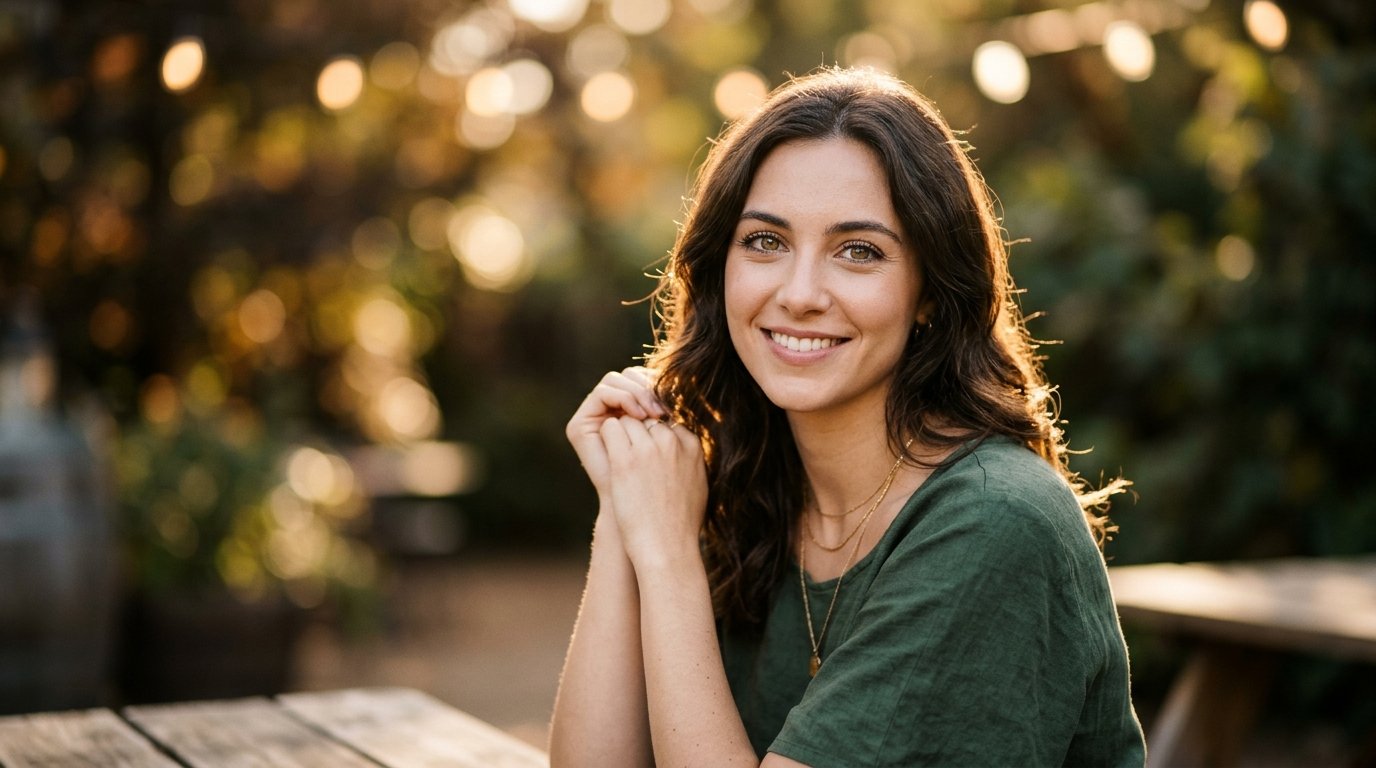
In physical optics, few visual attributes possess the immediate emotional allure of a photograph shot wide open with a fast prime lens. The subject stands in razor-sharp, crystalline relief while the background dissolves into a buttery, painterly wash of out-of-focus light discs and creamy color transitions. In photography, this optical phenomenon is known as 'bokeh'—derived from the Japanese word boke-aji, meaning 'blur quality'—and it is governed by the camera lens aperture.
When creators attempt to recreate this signature photographic depth in generative AI models like Midjourney v6.1, Black Forest Labs' Flux.1, and Google Gemini (Imagen 3), they frequently resort to generic prompt words such as 'blurry background,' 'blurred backdrop,' or 'bokeh effect.' The resulting images almost always look synthetic: the AI applies a crude, uniform digital Gaussian blur filter across the background, slicing cleanly through the subject's ears, hair strands, and shoulders like a sloppy Photoshop mask.
Real optical blur does not behave like a digital filter. It is an analog gradient of spherical aberrations and circle-of-confusion mechanics governed by optical geometry, lens aperture diaphragms (f-stops), focal length, and the physical distance between the camera sensor, the subject, and the background elements. When you instruct an AI model using authentic optical terminology—such as 'shot wide open at f/1.4,' 'shallow depth of field with 9-blade circular aperture bokeh discs,' or 'deep focus at f/8'—diffusion networks bypass synthetic blur filters and synthesize authentic physical lens characteristics.
This masterclass guide provides a comprehensive technical breakdown of how to control aperture and depth of field in generative AI prompts. You will learn the exact optical mechanics of f-stops, how to prompt circular bokeh discs, how to prevent background over-blurring, and tested copy-and-paste formulas engineered for masterclass portraiture, street photography, and commercial product imagery.
The physics of aperture and depth of field: F-stops demystified
In a physical camera lens, the aperture is an adjustable mechanical iris made of overlapping metal blades that controls the volume of light entering the camera sensor. The size of this opening is measured in f-stops (such as f/1.2, f/1.4, f/2.8, f/5.6, f/8, f/11). F-stop numbers are inversely proportional fractions (focal length divided by the entrance pupil diameter). Therefore: 1. A smaller f-number (f/1.2 or f/1.4) represents a wide, open aperture, which lets in maximum light and produces an ultra-thin, shallow depth of field (only a few millimeters or centimeters of the subject are in sharp focus). 2. A larger f-number (f/8 or f/11) represents a small aperture opening, producing a deep depth of field where both foreground subjects and distant landscapes remain in sharp focus. Modern AI diffusion models have ingested millions of real camera RAW files tagged with exact EXIF aperture metadata. Specifying the exact f-stop immediately instructs the neural network to emulate the physical optical behavior of that lens opening.
Why 'blurry background' fails: Gaussian mud vs optical bokeh
When you type 'blurry background' into an AI generator, the text encoder associates your request with digital post-processing terms rather than physical optics. The neural network often paints a flat, uniform blur across everything behind the subject, destroying spatial depth, atmospheric perspective, and environmental context. Conversely, true optical bokeh possesses structure: out-of-focus point light sources (such as streetlamps, fairy lights, or sunlight filtering through tree leaves) transform into luminous circular or polygonal light discs known as 'circles of confusion.' To get authentic optical separation, eliminate the word 'blur' from your prompts and replace it with: 'shot wide open at f/1.4, shallow depth of field, creamy optical falloff, organic circular bokeh discs in the out-of-focus background.'
The f-stop cheat sheet for AI prompt creators
Different aperture values serve distinct creative purposes in AI photography: 1. f/1.2 to f/1.4 (Dreamy, Ethereal Isolation): Ideal for intimate beauty portraits, bridal captures, and romantic cinematic frames. Razor-thin plane of focus where the iris and eyelashes are sharp while ears and hair tips begin to melt into soft creamy bokeh. 2. f/1.8 to f/2.0 (The Professional Portrait Standard): The sweet spot for corporate headshots, fashion editorials, and couple portraits. Keeps the entire face and jawline in crisp focus while gracefully softening background distractions. 3. f/2.8 to f/4.0 (Environmental Storytelling): Keeps the subject sharp while preserving enough background detail to establish context (e.g., architectural details, cafe interiors, or street scenes). 4. f/8 to f/11 (Deep Focus & Landscape): Everything from the foreground subject to distant horizon mountains is rendered in sharp, architectural clarity.
Anatomy of creamy bokeh: Aperture blades and optical discs
Not all bokeh is created equal. The aesthetic quality of background blur depends on the physical construction of the lens iris: 1. Circular Aperture Discs: Modern high-end prime lenses (such as the Canon 85mm f/1.2L or Sony 135mm f/1.8 GM) feature 9 or 11 curved aperture blades that create perfectly spherical, creamy out-of-focus highlights. Specify: 'creamy circular bokeh discs, soft highlight roll-off, 11-blade aperture rendering.' 2. Cat-Eye Bokeh (Vignetting): Towards the outer edges of the frame, wide-open lenses often produce oval, elliptical bokeh known as cat-eye bokeh or swirly bokeh (characteristic of vintage Petzval lenses): 'subtle optical cat-eye bokeh distortion near the frame periphery.' 3. Onion-Ring Bokeh: A flaw caused by aspherical lens grinding where bokeh discs show concentric internal rings. If your AI image exhibits harsh, ringed bokeh, add 'harsh onion ring bokeh, jagged polygonal blur' to your negative prompt.
The interplay of focal length, sensor size, and aperture
Aperture alone does not determine background blur; it operates in synergy with focal length and subject distance: 1. 85mm at f/1.4: Creates intense telephoto background compression, pulling background lights closer and magnifying them into massive, glowing circular bokeh spheres. 2. 35mm at f/1.4: Provides wide-angle environmental context with subtle, intimate background separation. 3. Full-Frame vs Medium Format: Medium format camera sensors (like Hasselblad or Fujifilm GFX) produce an even shallower, more three-dimensional depth of field at equivalent f-stops, often described as 'medium format 3D pop.' In prompts, specify: 'medium format camera portrait, 80mm f/1.9 lens, creamy depth of field, three-dimensional subject separation.'
Foreground bokeh: The secret to three-dimensional cinematic framing
Most amateur creators focus exclusively on background blur. Master cinematographers frequently introduce foreground elements—such as out-of-focus flower petals, raindrops on a window, or a passing shoulder—to sandwich the sharp subject between two layers of optical softness. In AI prompts, specify: 'cinematic frame-within-a-frame composition, soft dreamy out-of-focus cherry blossom petals in the extreme foreground, subject in sharp focus at f/1.4, creamy circular bokeh in background.' This creates profound three-dimensional depth.
Tested Copy-and-Paste Aperture & Bokeh Formulas
Formula 1 — Ultra-Creamy Golden Hour Portrait (Midjourney / Flux): 'Breathtaking cinematic medium-close portrait of an expressive young woman in an outdoor garden cafe during sunset. Shot wide open on an 85mm f/1.2 prime lens with razor-sharp focus on the subject\'s eyes, iris catchlights, and natural skin pores. The background dissolves into a dreamy wash of creamy, melted circular bokeh discs from distant warm cafe fairy lights and amber sunset foliage. Soft golden rim light on hair, natural subsurface scattering, authentic film texture, photorealistic --ar 16:9 --style raw.' Formula 2 — Urban Street Bokeh (Gemini Imagen 3 / Flux): 'A moody nighttime street portrait of a man standing under soft city lights. 50mm f/1.4 lens, shallow depth of field, sharp focus on face and jacket collar. Background traffic lights and neon storefronts transformed into large, colorful circular bokeh orbs. Subtle lens flare, high dynamic range, cinematic color grade.' Formula 3 — Commercial Environmental Editorial (f/2.8 Context): 'An editorial fashion portrait of a model in a high-end architectural art gallery. 35mm f/2.8 lens, balanced depth of field where the model is sharply rendered while gallery sculptures and patrons in the background are softly recognizable with gentle optical falloff.'
Model benchmark: How AI models interpret aperture terminology
1. Flux.1 (Dev): Demonstrates the most physically accurate circle-of-confusion mechanics. When given 'f/1.4,' Flux correctly isolates the focal plane and keeps eyelashes sharp while softly blurring the ears and hair tips. 2. Midjourney v6.1: Produces the most aesthetically pleasing, glowing bokeh discs and chromatic highlight roll-off. Pair with '--style raw' to prevent excessive cosmetic smoothing. 3. Google Gemini (Imagen 3): Excels at maintaining natural facial proportions and lifelike skin texture under wide-open aperture conditions without generating digital halo artifacts around hair.
When NOT to use shallow depth of field
Shallow depth of field is a powerful tool, but overusing f/1.2 or f/1.4 can ruin images where environmental context is essential: 1. Group & Multi-Person Portraits: If multiple people are standing at varying distances, f/1.4 will leave half the group blurred. Use f/4.0 or f/5.6. 2. Architectural & Travel Photography: When capturing grand monuments (like the Taj Mahal or Mysore Palace), specify f/8 or f/11 so the intricate stone carvings remain crisply legible. 3. Complex Action & Vehicles: High-speed sports or cars look best at f/4 to f/8 with motion blur rather than static optical blur.
Frequently Asked Questions
What is the difference between f/1.4 and f/2.8 in AI prompts?
An f/1.4 aperture creates an ultra-shallow depth of field where only the subject's face is sharp and the background is completely melted into soft, circular bokeh discs. An f/2.8 aperture provides a slightly deeper focus zone, keeping the entire person and clothing crisp while gently blurring the background so the location remains recognizable.
How do I prompt circular bokeh discs instead of flat blur in Midjourney and Flux?
Instead of 'blurry background,' specify: 'shot wide open at f/1.4, shallow depth of field, creamy circular bokeh discs from background point lights, smooth optical falloff.'
What lens and aperture combination gives the creamiest portrait bokeh?
An 85mm f/1.2 or 105mm f/1.4 telephoto prime lens. The combination of telephoto focal length and wide aperture maximizes background compression and creates the smoothest optical blur.
Why does my AI image look like a fake Photoshop cutout?
This happens when prompts use 'blurry background' or 'isolated background.' Replace those terms with physical lens numbers: '85mm f/1.8 lens portrait, natural optical depth of field falloff, realistic hair edge transitions.'
When should I use a deep aperture like f/8 or f/11?
Use f/8 or f/11 for landscape photography, architectural monuments, street markets, and group portraits where you want every element from foreground to background rendered in sharp, crisp detail.
Put an idea into words.
Find a prompt, change a detail, and explore a new direction.
Explore prompts →